The complete ritual, step by step
The ritual is short. Done properly it takes about four minutes, and every step in it is doing something specific — which is easy to miss when you have watched it a hundred times without anyone explaining it.
The thali
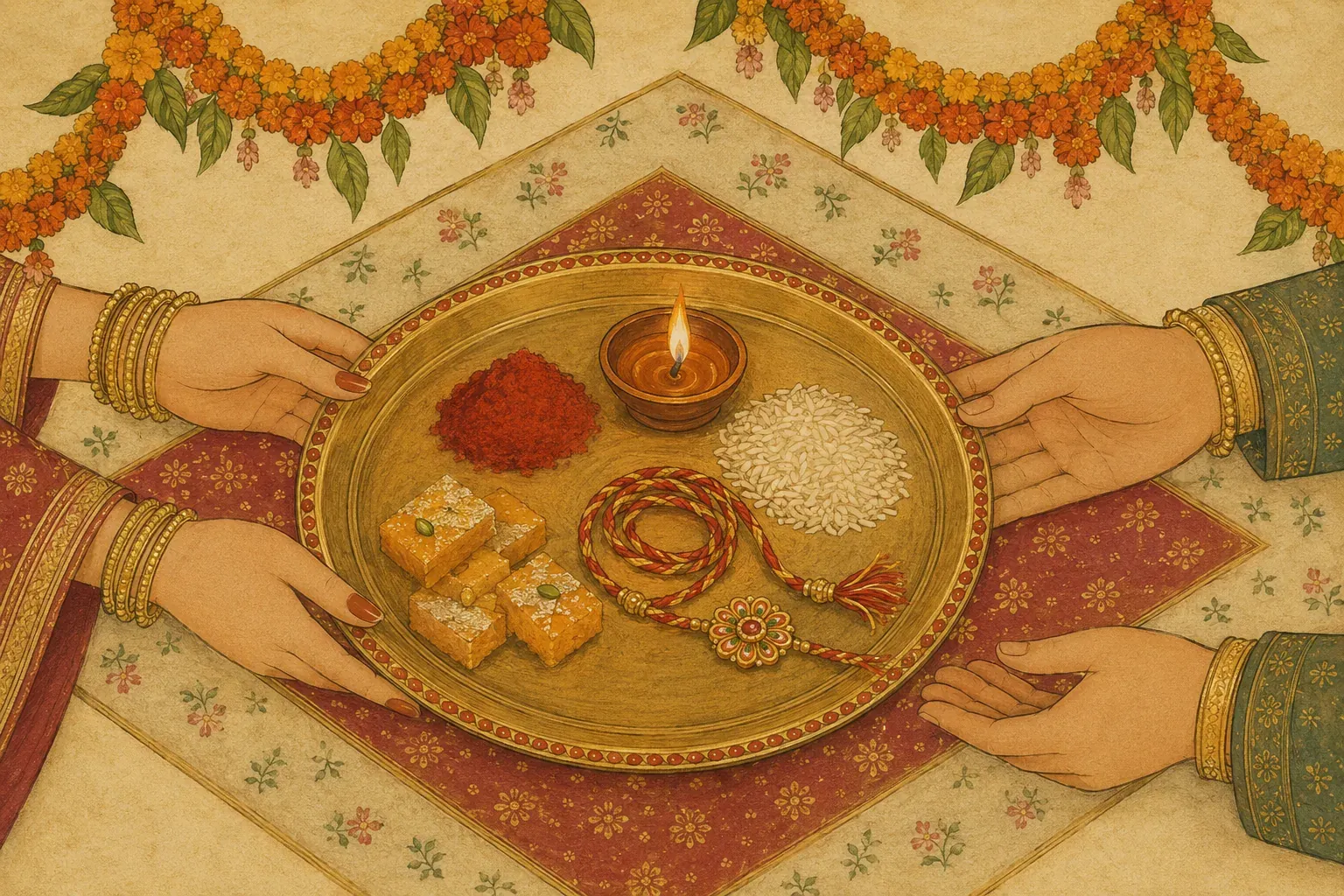
Everything sits on one plate, prepared in advance.
Roli or kumkum — the red powder for the tilak. Red is the auspicious colour, and the mark is a blessing placed at the point between the brows.
Akshat — uncooked rice grains, always whole. The word means unbroken, and that is the entire reason they are there. Broken grains are deliberately picked out. Something whole and undamaged is pressed onto the forehead as a wish that the bond stays whole and undamaged.
A diya — the lit lamp, for the aarti.
The rakhi itself — anything from a cotton thread to a stone-studded kundan piece. A lumba is the variant hung from a bhabhi’s bangle rather than tied at the wrist.
Sweets — whatever the household makes. There is no correct mithai.
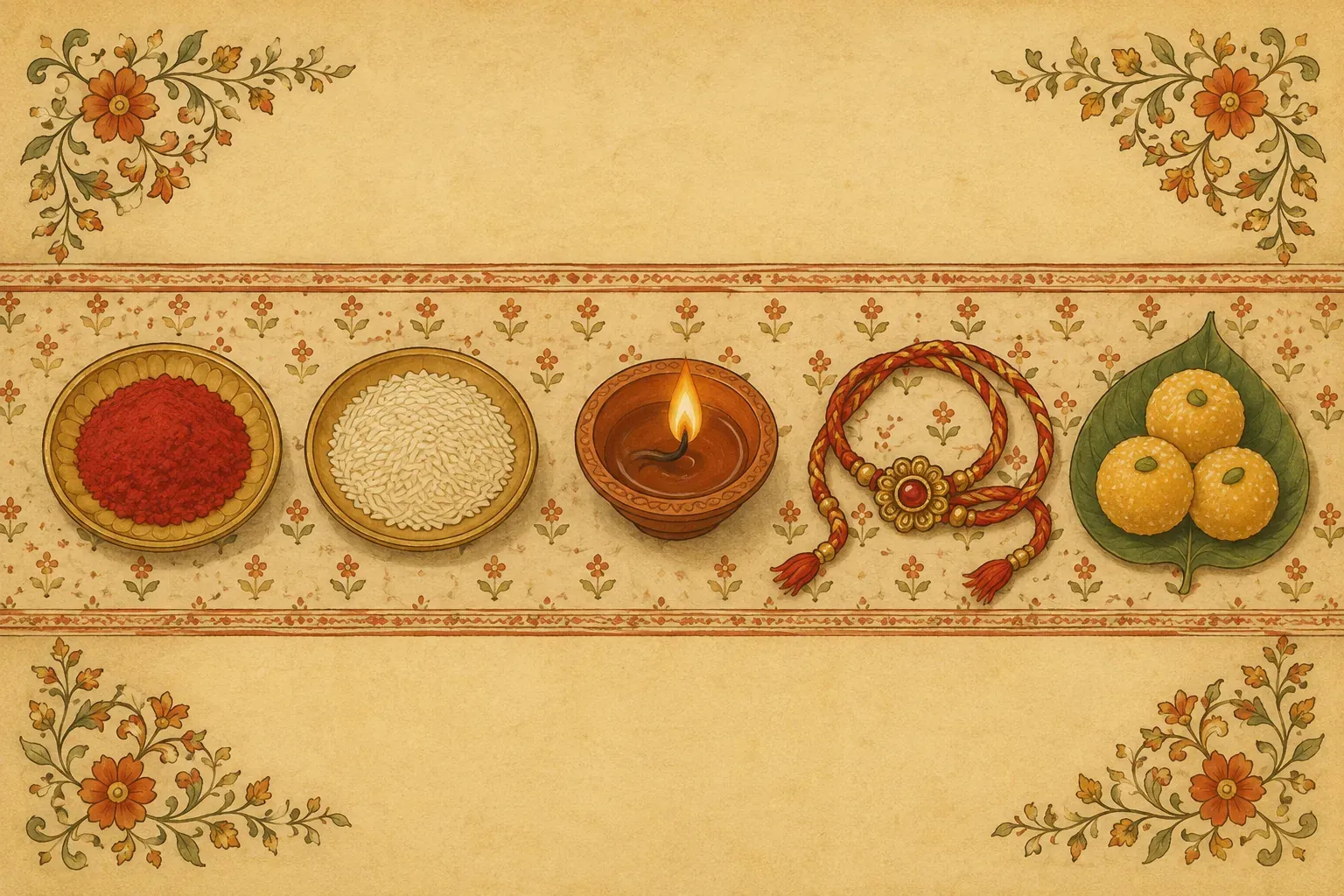
Many families add a small kalash of water, a coconut, flowers, and a handkerchief or cloth for the brother to cover his head. All optional, all regional.
The steps, in order
1. He sits facing east. East where possible, north otherwise. Head covered in families that observe it.
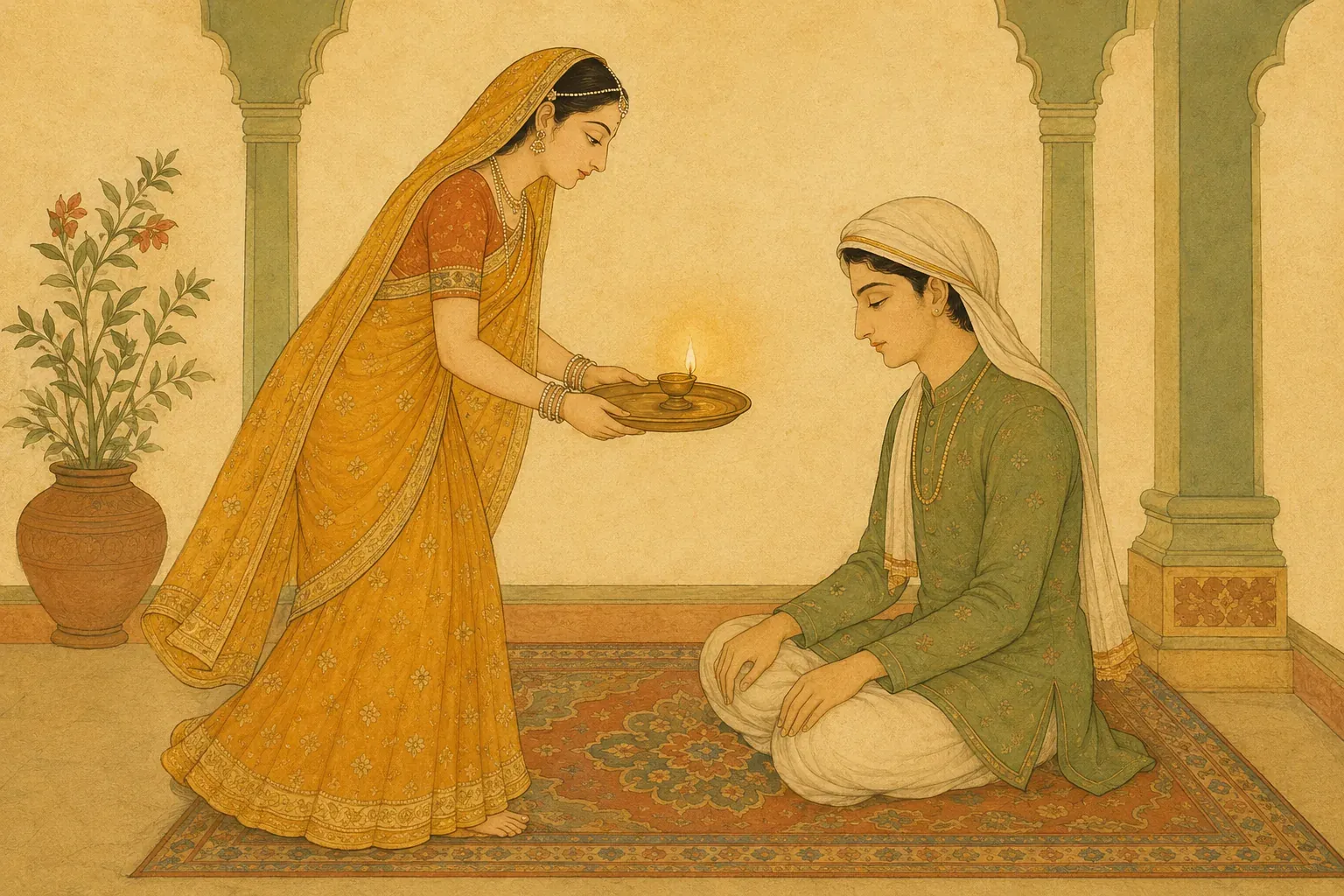
2. Aarti. She circles the lit diya in front of him, clockwise, a few times. The flame is moved around the person, not held still — the gesture is one of warding off, and it opens the ritual because everything after it is a blessing and the blessing goes first.
3. Tilak. Roli applied with the ring finger of the right hand to the centre of the forehead. The ring finger is used for auspicious application; the index finger is not.
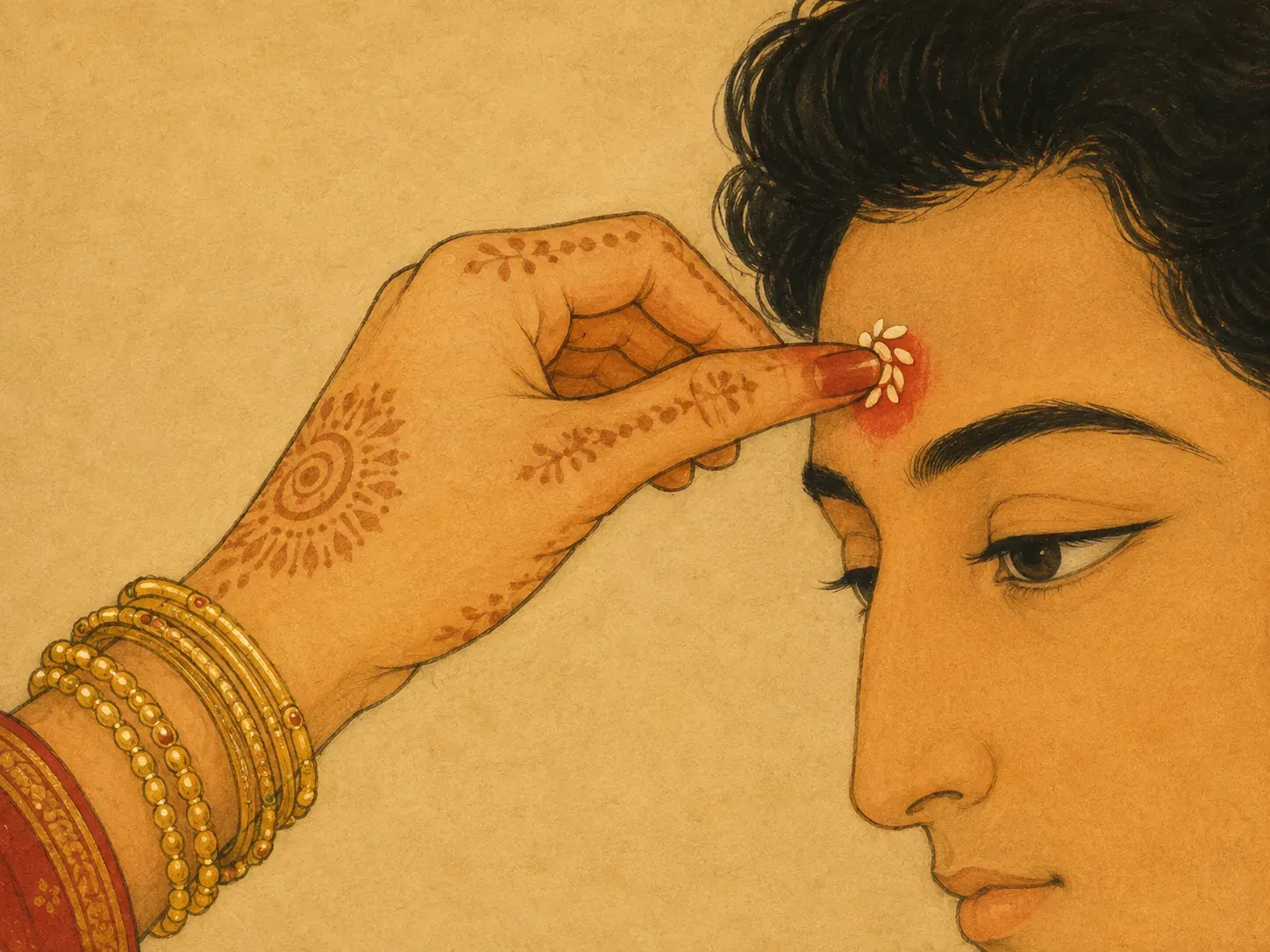
4. Akshat. A few whole grains pressed onto the wet tilak, and a few more sprinkled over his head.
5. The rakhi is tied. On the right wrist. In Hindu practice the right hand is the hand of action and of giving, and ritual acts are performed with it, so the protective thread belongs there. This is the moment the whole day is built around, and it is over in three seconds.
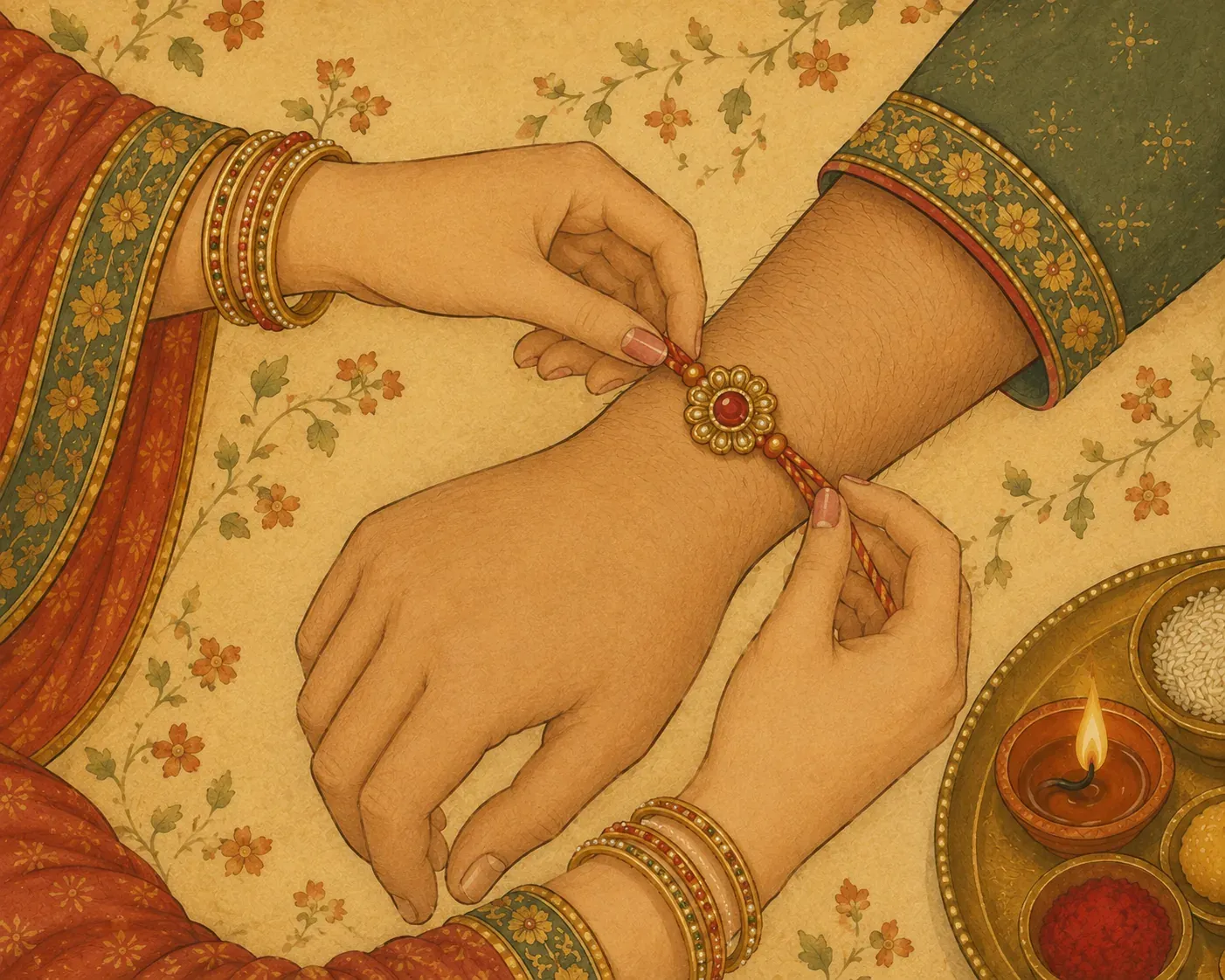
6. Sweets. She feeds him first, by hand. He feeds her back. Sharing food from the hand is what closes a promise in almost every Indian ritual — the undertaking is not complete until it is eaten on.
7. Neg. He places money or a gift in her hand. This is his half of the exchange, and it is not a payment. She has given a blessing; he gives something back so that the transaction is visibly two-sided and everyone in the room has seen him accept it.
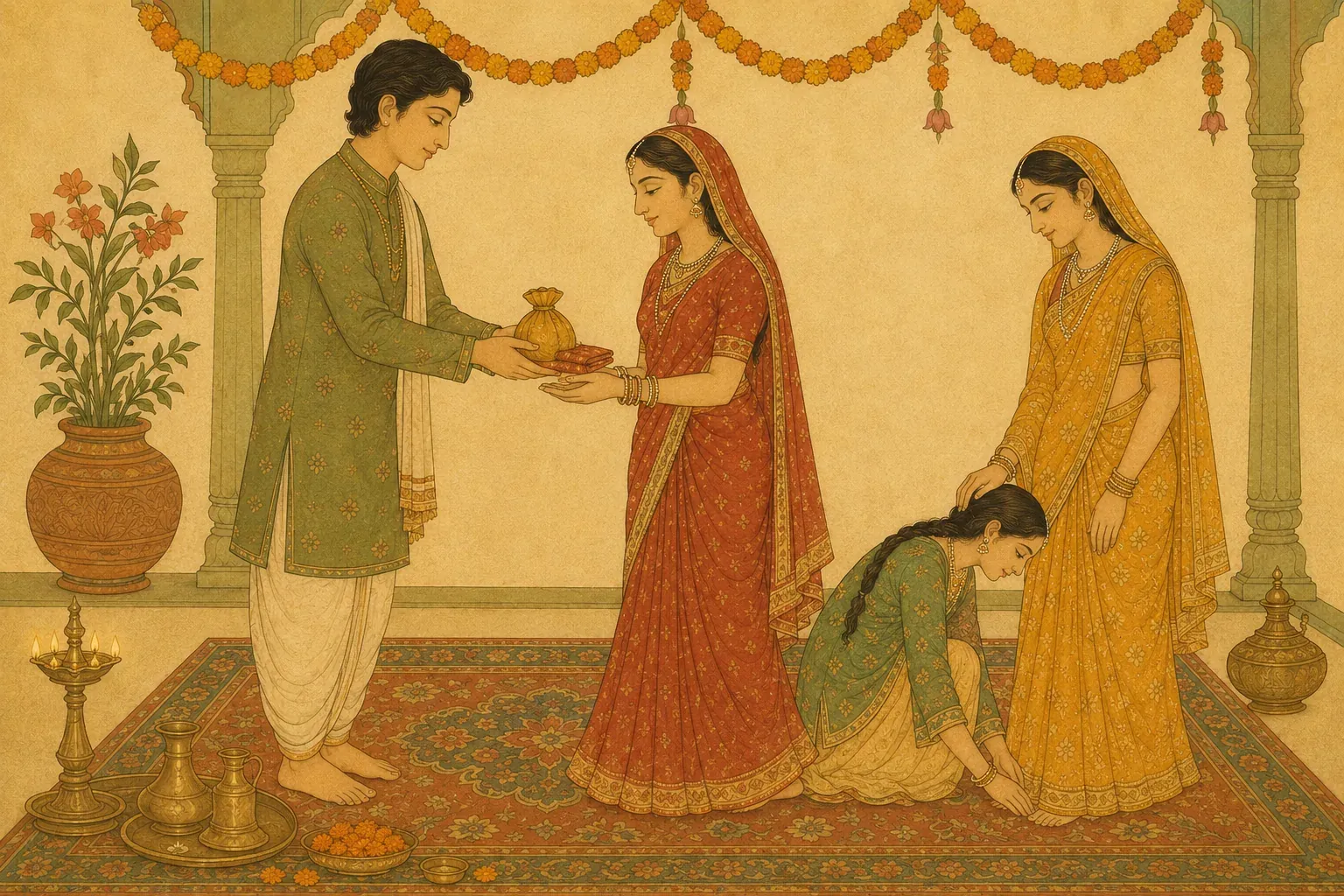
8. Feet are touched. The younger touches the elder’s feet, in whichever direction that runs. It very often runs from the brother to an older sister, which quietly undoes the assumption that the festival is about a man protecting a woman.
Two things people get wrong
The direction of protection. The most common description — sisters ask their brothers for protection — deletes half of what happens. She performs the aarti, applies the tilak, ties the thread and prays for his wellbeing. She is the officiant, and for the length of the ritual she is the one giving. He receives, and then undertakes. Both halves are needed.
Which wrist. Left is not a small variation, it is simply the wrong wrist, and it is worth knowing before the moment arrives rather than after.
When nobody is in the same city
Most families now have at least one person somewhere else, and the ritual has absorbed that without much fuss.
Post the rakhi early. Delivery inside India gets slow in the fortnight before the festival, and a thread that arrives on the 30th is a thread nobody tied.
Do the ritual on the call. Aarti on one screen, tilak applied by whoever is there or by himself, thread tied by him or by a parent, sweets eaten at both ends. Every part of it survives being distributed.
Send neg digitally. UPI has been doing this job for years now.
Keep the timing loose. The tying window matters, but a call that both people can actually make matters more. The date and muhurat are here if you want to try for it.
The part that carries
None of the objects are valuable. The rice is rice, the powder is powder, and the thread is worth less than the postage. That is not incidental to the ritual — it is the argument the ritual is making.
The whole thing is built out of the cheapest possible materials so that nothing in it can be mistaken for the point. What is being handled is the promise, and the promise is the only part that was ever expensive.
Read next: Why Raksha Bandhan is celebrated · Krishna and Draupadi · Raksha Bandhan 2026: date and timing
आम सवाल
- What items are needed for the Raksha Bandhan thali?
- A rakhi, roli or kumkum, unbroken rice grains (akshat), a lit diya, and sweets. Many families add a small bowl of water, a coconut, and flowers. Nothing on the list is expensive, and nothing on it is mandatory.
- What is the correct order of the Raksha Bandhan ritual?
- Aarti with the lit diya, then the tilak of roli on the forehead, then akshat pressed onto the tilak, then the rakhi tied on the right wrist, then sweets fed by hand, then neg given by the brother, then the touching of feet if the sibling is elder.
- On which hand is rakhi tied?
- The right wrist. In Hindu practice the right hand is the hand of action and of giving, and rituals are performed with it, so the protective thread is tied there.
- Why is akshat used in the tilak?
- Akshat means unbroken. The rice grains are chosen specifically because they are whole and undamaged, and they are used as a wish that the relationship stays the same way.
- What is neg?
- Neg is the money or gift the brother places in his sister's hand after the rakhi is tied. It is his half of the exchange — the visible acknowledgement of the promise he has just accepted.
- Can rakhi be tied over a video call?
- Yes, and a great many families now do. The thread is usually posted in advance, the ritual is performed on the call, and neg is sent digitally. Nothing about the meaning changes.