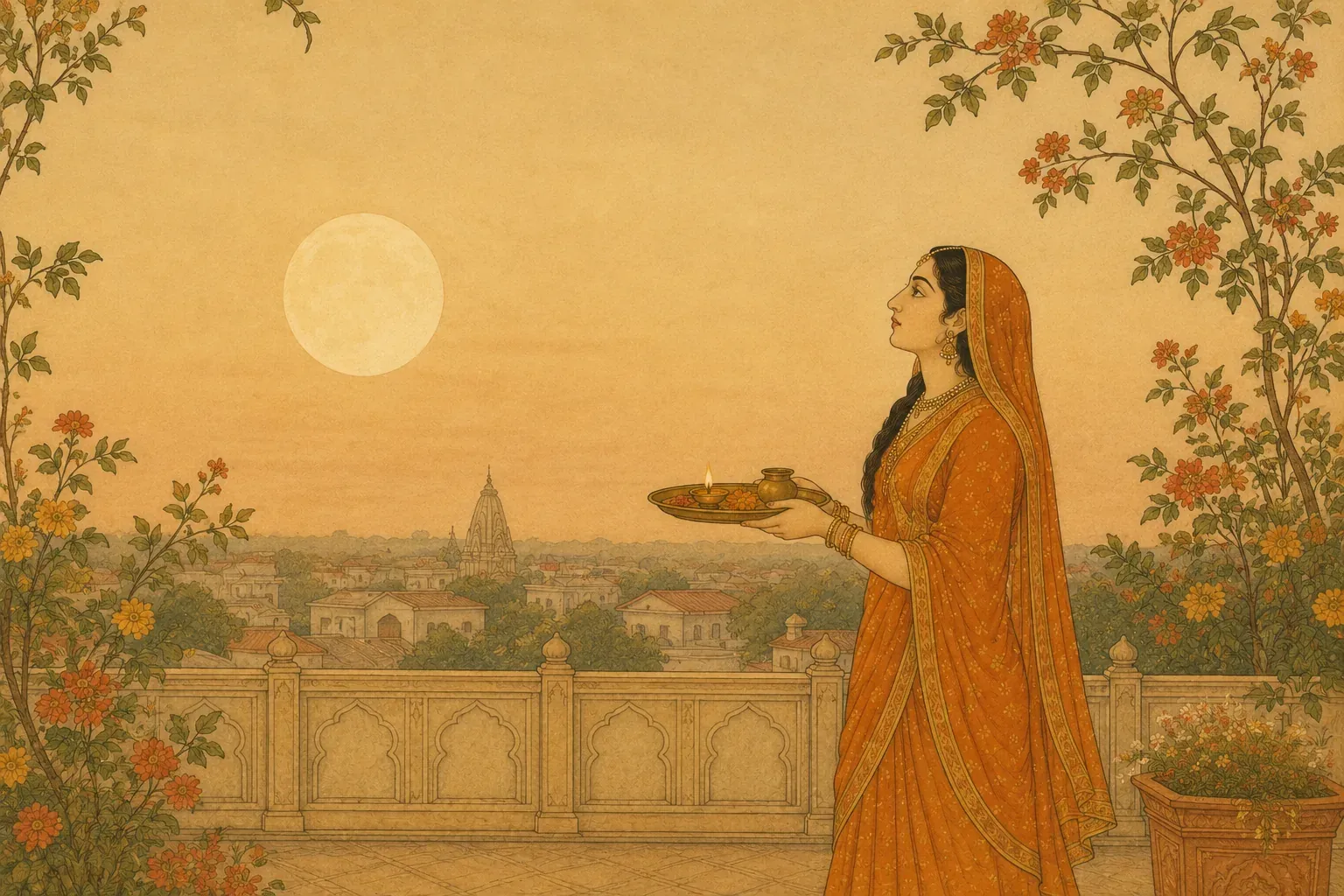
Raksha Bandhan 2026: the date, and how the timing is decided
Raksha Bandhan 2026 falls on Friday, 28 August.
If that feels late, it is. In 2025 the festival was on 9 August; in 2024, the 19th. A jump of nearly three weeks in the other direction is unusual enough that it is worth explaining, because the explanation is also the answer to why the date moves at all.
Why the date moves every year
Raksha Bandhan is not fixed to the Gregorian calendar. It falls on Shravana Purnima — the full moon day of the lunar month of Shravana.
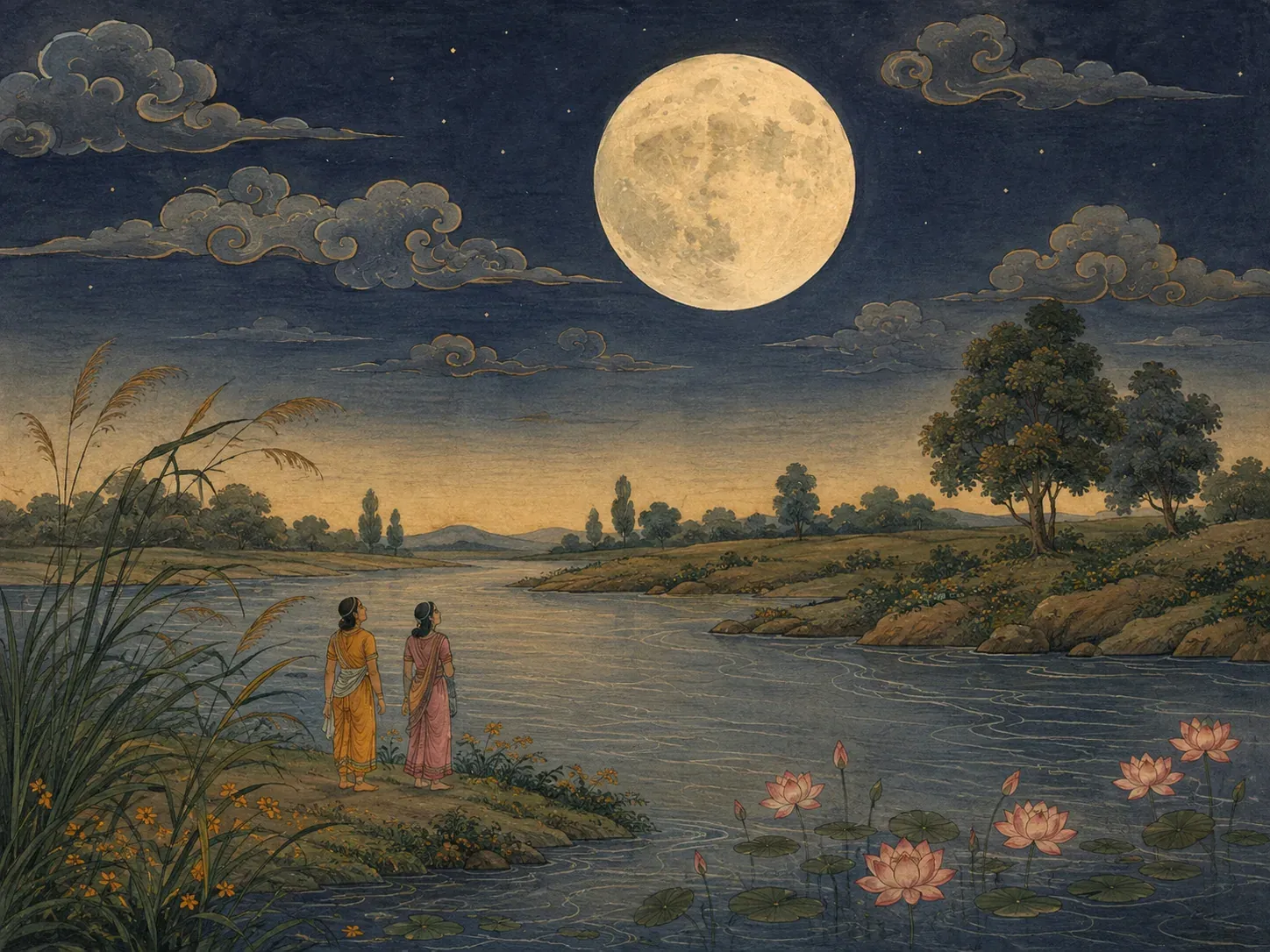
A lunar year of twelve months runs about 354 days, roughly eleven days shorter than the solar year. Left alone, the festivals would drift steadily backwards through the seasons, and within a couple of decades Shravana would arrive in winter. Which is why the Hindu calendar is not purely lunar but lunisolar: it corrects.
The correction, and why 2026 is late
The correction is the Adhik Maas — an extra month, inserted roughly every 32 to 33 months, to pull the lunar calendar back into alignment with the solar one. It is also called Purushottam Maas.
2026 has one: Adhik Jyeshtha, running from 17 May to 15 June. Jyeshtha occurs twice this year — the intercalary month first, then the true one. Both fall before Shravana, so every festival after them lands about a month later on the Gregorian calendar than the usual eleven-day drift would suggest.
That is the whole reason for the jump. Nothing about the festival changed — the calendar simply took its scheduled correction, and Raksha Bandhan came along for the ride.
Bhadra kaal
This is the part that catches people out, because it means the festival day and the tying time are not the same thing.
A tithi — a lunar day — is divided into halves called karana. Vishti karana, universally known as Bhadra, is treated as an inauspicious period. In tradition Bhadra is the sister of Shani, and anything begun during her period is held to go wrong.
The custom is firm and almost universally observed: a rakhi is not tied during Bhadra. The reasoning is that the thread is tied as an act of protection, and an act of protection begun in an inauspicious period is taken not to carry.
Bhadra frequently occupies part of the Purnima tithi, and often part of the morning. This is precisely why so many families sit around a fully prepared thali until the afternoon: they are waiting it out.
When the rakhi is actually tied
Two conditions have to hold together at the moment of tying:
- Purnima tithi is running. The tithi does not begin or end at midnight; it starts and finishes at particular clock times that differ every year.
- Bhadra is not running.
The window is the overlap. Where there is a choice, the preferred slot is aparahna — the late afternoon, roughly the fourth of the day’s five parts. Where aparahna is unavailable, because Bhadra runs into it or because Purnima ends before it, the usual fallback is pradosh, just after sunset.
The 2026 window is a morning one
This year is unusual in two ways, and both work in your favour.
Purnima begins at 09:08 on Thursday 27 August and ends at 09:48 on Friday 28 August. The festival is kept on the 28th because that is the day the tithi is running at sunrise.
There is no Bhadra on the festival morning. Bhadra falls on the 27th and clears before sunrise on the 28th. In most years the thali sits ready while the family waits Bhadra out; in 2026 there is nothing to wait for.
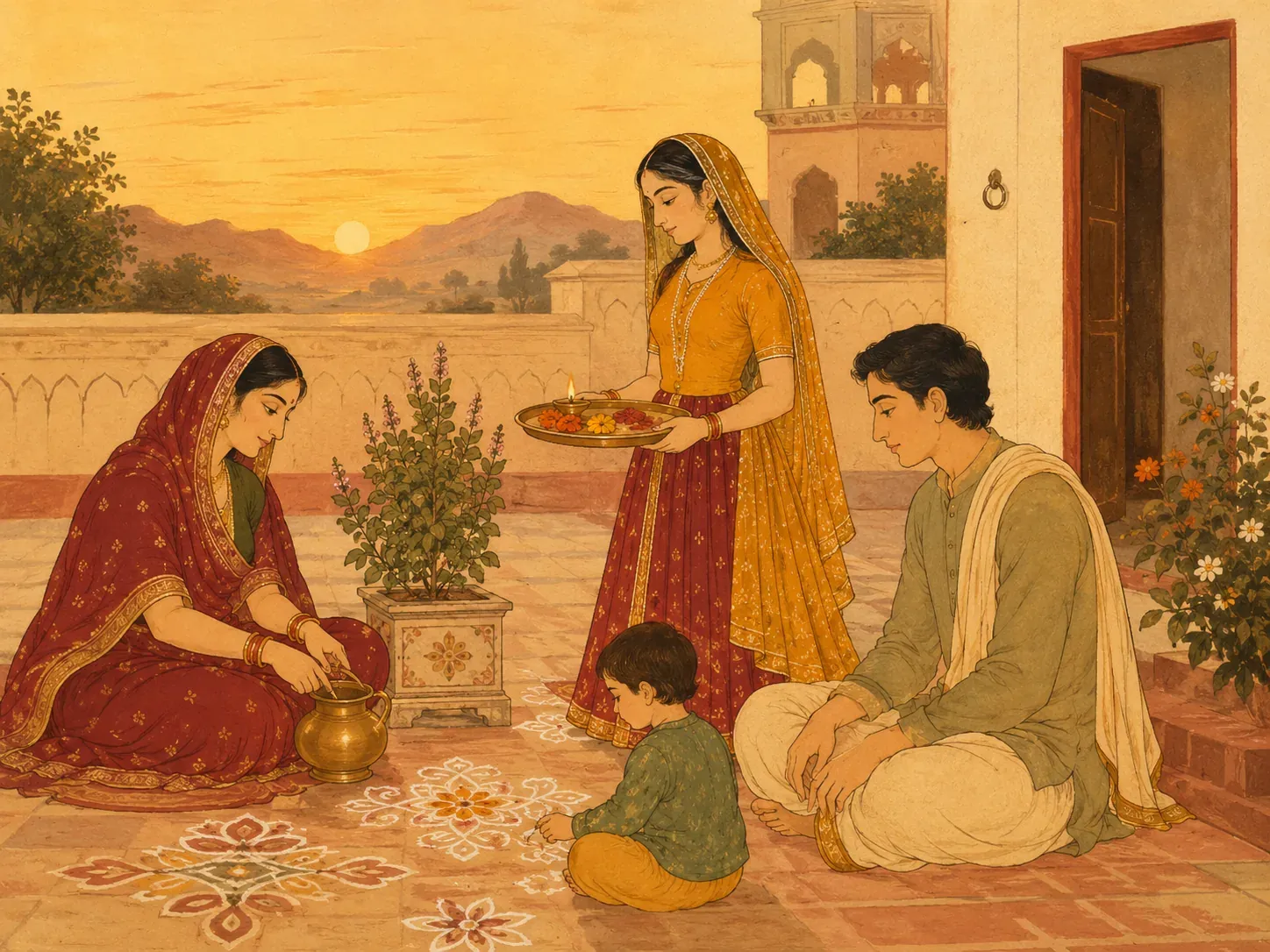
The consequence is that the whole window sits before ten in the morning:
- Opens at sunrise, around 05:57.
- Closes at 09:48, when Purnima ends.
So the advice that holds in most years — prepare in the morning, tie in the afternoon — is exactly wrong for 2026. There is no afternoon slot, because the tithi is over by mid-morning. If your family normally tie after lunch, this is the year to set an alarm.
These times are computed for New Delhi. Every panchang calculation keys off local sunrise, and sunrise in Guwahati and in Ahmedabad are more than an hour apart. The Purnima start and end are astronomical moments and hold nationally; the sunrise that opens the window does not. Check a panchang for your own city, or ask your purohit — it is exactly the question they expect on this day.
The lunar eclipse on the same day
There is a partial lunar eclipse on 28 August 2026, and it has been causing some confusion about whether the ceremony is affected. It is not.
The eclipse is not visible from India. It runs from about 06:55 to 12:32 IST, and for that entire span the moon is below the Indian horizon. It is a deep partial eclipse — around 96% of the disc covered, enough to redden it — but the places that will see it are the Americas, Africa, Europe and Antarctica.
This matters because of sutak, the observance period before and during an eclipse in which temples close and auspicious work is set aside. The rule that governs sutak is visibility: an eclipse that cannot be seen from a place is not observed at that place. Since the moon is below the horizon across India for the whole event, there is no sutak here, and the tying window stands exactly as the panchang gives it.
If you are reading this from outside India, check your own local visibility and timings — in North America in particular the eclipse is visible, and the usual sutak observances would apply there.
If you cannot make the window
Tie it anyway.
A rakhi tied outside the muhurat is worth immeasurably more than one not tied at all, and every family already knows this. If the only slot you and your brother both have is a video call at ten at night, that is the right time. The window is a preference, not a gate.
Read next: The complete ritual, step by step · Why Raksha Bandhan is celebrated
Rakhi muhurat 2026 by city
The window closes at the same moment everywhere in India — 09:48 on Friday 28 August — because that is when the Purnima tithi ends, and a tithi ends at one instant nationally. What changes from city to city is when it opens, because that is local sunrise.
| City | Rakhi tying time | How long |
|---|---|---|
| Kolkata | 05:18 – 09:48 | 4 hr 30 min |
| Lucknow | 05:44 – 09:48 | 4 hr 4 min |
| New Delhi | 05:57 – 09:48 | 3 hr 51 min |
| Chandigarh | 05:57 – 09:48 | 3 hr 51 min |
| Chennai | 05:58 – 09:48 | 3 hr 50 min |
| Hyderabad | 06:01 – 09:48 | 3 hr 47 min |
| Jaipur | 06:04 – 09:48 | 3 hr 44 min |
| Bengaluru | 06:08 – 09:48 | 3 hr 40 min |
| Pune | 06:19 – 09:48 | 3 hr 29 min |
| Ahmedabad | 06:21 – 09:48 | 3 hr 27 min |
| Mumbai | 06:23 – 09:48 | 3 hr 25 min |
Times are Indian Standard Time. Panchangs differ by a minute or two on the tithi end — one widely used almanac puts it at 09:50 rather than 09:48 — so treat the last few minutes as a margin rather than a deadline.
आम सवाल
- Is there a chandra grahan on Raksha Bandhan 2026, and does sutak apply?
- There is a partial lunar eclipse on 28 August 2026, but it is not visible from India — the moon is below the horizon here for the whole event, roughly 06:55 to 12:32 IST. Sutak follows visibility, so it does not apply in India and the tying window is unaffected.
- What time should rakhi be tied in Mumbai, Delhi or Kolkata in 2026?
- The window ends at 09:48 everywhere in India, because that is when the Purnima tithi ends. It opens at local sunrise — 05:18 in Kolkata, 05:57 in Delhi, 06:23 in Mumbai — so eastern cities get a longer morning. The table on this page lists eleven cities.
- When is Raksha Bandhan in 2026?
- Raksha Bandhan 2026 falls on Friday, 28 August. The festival is observed on Shravana Purnima, the full moon of the month of Shravana.
- Why is Raksha Bandhan so late in 2026?
- Because 2026 has an Adhik Maas, an extra month inserted into the Hindu lunisolar calendar to keep it aligned with the solar year. Every festival after that insertion lands roughly a month later than it otherwise would.
- What is Bhadra kaal and why is rakhi not tied during it?
- Bhadra is an inauspicious period within a tithi, associated in tradition with Shani's sister of the same name. Custom holds that a rakhi tied during Bhadra does not carry its protective intent, so families wait for Bhadra to end before tying.
- What is the best time to tie rakhi in 2026?
- Between sunrise and 09:48 on Friday 28 August. The Purnima tithi ends at 09:48, so unlike most years the window is a morning one and there is no afternoon slot at all. Times are for New Delhi and shift with local sunrise.
- Is there Bhadra on Raksha Bandhan 2026?
- No — and that is unusual. Bhadra falls on 27 August and clears before sunrise on the 28th, so the entire festival morning is free of it. In most years families wait out Bhadra before tying; in 2026 there is nothing to wait for.
- Can rakhi be tied in the afternoon in 2026?
- Not within the tithi. Purnima ends at 09:48, so the aparahna window that is traditionally preferred does not exist this year. A rakhi tied later still counts for every family that cannot manage the morning.